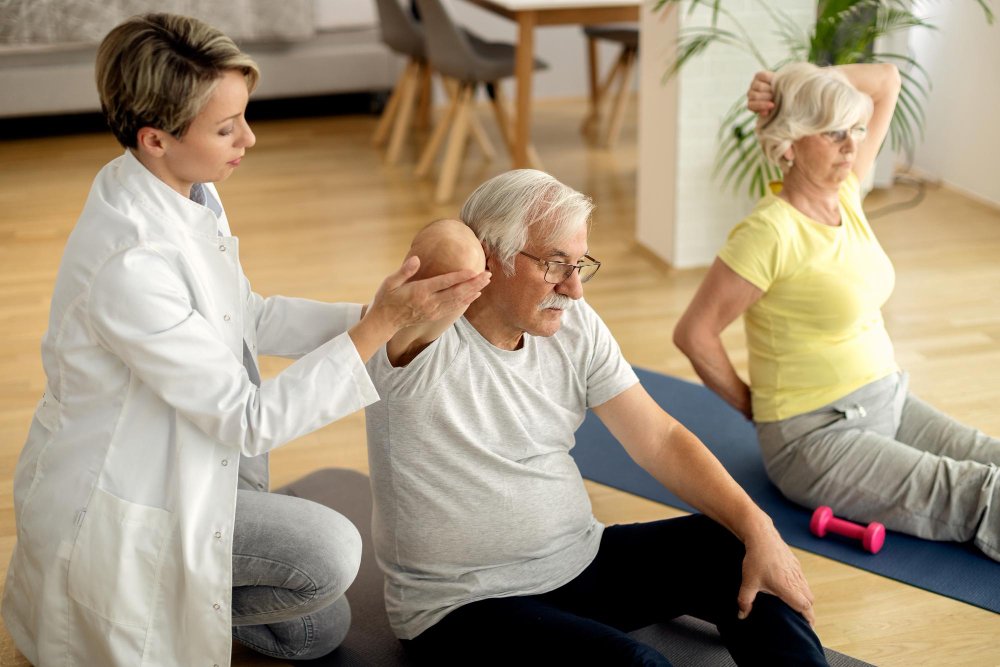
Parkinson disease is a progressive neurological disorder, which may impact on movement, balance, coordination, posture and ability of an individual to carry out daily activities. People have different symptoms, but typical movement challenges may include stiffness, slower movement, walking difficulties, decreased balance, movement initiation or termination.
Although Parkinson’s disease, it may be of significance in assisting individuals to remain active, independent and confident in their day to day activities. Dr Shifa Shaikh explains that an individualised physiotherapy programme could be targeted at which movements an individual has certain difficulties and assist that person to remain able to perform the daily tasks as safely and independently as he or she is possible.
To individuals seeking physiotherapy of Parkinson disease Thane, knowing how neurological rehabilitation comes in would assist patients and families when making decisions regarding further care.
How Does Parkinson’s Disease Affect Movement?
Even in individuals, Parkinson’s disease physiotherapy Thane movement may be impaired in a different manner by Parkinson disease. Others might feel stiff and move more slowly and others might be aware of some change in balance, walking, posture or co-ordination.
The condition can at times make walking tougher. An individual might walk with shorter strides, slower paces, less arm movement or be unable to turn. Others might also be affected by freezing in which their feet temporarily become stuck to the floor.
Such mobility issues are among the reasons why the physiotherapy at Parkinson disease Thane can be included in the general management strategy of an individual.
A neuro physiotherapist Thane can evaluate the mobility, the strength, balance, posture, walking pattern, transfers, and functional activities and then devise a rehabilitation programme depending on the needs of the individual.
What Is the Role of Physiotherapy in Parkinson’s Disease?
Physiotherapy would be used to assist patients to keep up their physical capacities and deal with the issues associated with movement.
The particular programme is based on the symptoms of the person, the stage of the condition, physical ability, lifestyle and personal objectives.
Neurophysiotherapy Thane can involve exercises and plans that aim at improving mobility, strength, flexibility, posture, balance, walking, and functional movement.
As an illustration, some patients might require assistance most with walking and balance, whereas others might require assistance with getting out of a chair, turning in bed, getting around their house, or exercising.
Individuals seeking the Best Physiotherapist in Thane to treat Parkinsonism should thus, seek whether the physiotherapist has experience in dealing with neurological conditions and offers personalised tests.
1. Improving Mobility and Flexibility
Some people with Parkinson disease experience muscle stiffness that makes their daily movements harder.
Exercises that promote mobility and flexibility of the shoulders, trunk, hips and lower limbs may be part of a physiotherapy programme.
In the case of physiotherapy of Parkinson disease Thane, it is not just to go through a checklist of exercises. The therapy must be tailored to the present abilities and functional difficulties of the patient.
A physiotherapist can also educate the use of strategies that make some of the movements easier to start and to execute.
Exercise when suitable to the person can be a significant component of overall mobility and physical activity.
2. Balance Training and Fall Prevention
Balance alterations may have an impact on self-confidence and complicate the execution of daily tasks.
Balance and gait training Thane can aim to assist an individual learn to enhance postural control, adopt safe movement precautions, and deal with balance-challenging situations.
The exercises can be the controlled weight movement, stepping exercises, direction change, reaching, or everyday life relevant movements.
A neuro physiotherapist Thane is able to evaluate the balance of the person and when some other strategies can prove useful.
Individuals seeking the Best Physiotherapist in Thane to help them with their neurological rehabilitation ought to enquire whether balance assessment and fall-risk management are part of the treatment strategy.
3. Gait Training for Better Walking
Movement-related issues that are typical of Parkinson disease include changes in walking.
Balance and gait training Thane can also assist patients in walking patterns, length of steps, turning, stopping, starting and working out in various environments.
External cueing strategies can also be used by some people. Visual or rhythmic cues can be used to aid movement initiation and walking, depending on the symptoms of a person.
Individual needs should always be reflected in the treatment. Balance and gait training Thane aims at enhancing functional walking as opposed to anticipating all the patients to walk in a precisely similar manner.
Therapy can also involve the practising of stairs, obstacles and other situations the person encounters on a regular basis where necessary.
4. Improving Posture
Parkinson changes of the posture may be caused. A forward-flexed posture progressively develops in some people and may affect balance, walking and the daily locomotion.
Physiotherapy can involve exercises to aid in posture, trunk mobility, strength, and body awareness.
With neurophysiotherapy Thane, patients are able to acquire exercises and movement techniques that befits their capabilities.
If posture work is included in functional activities, standing, walking, sitting and position changeover may be included.
Instead of attempting to put the body into a fixed stance, physiotherapy involves the endeavor to ensure that the individual can move and have as much functionality as is possible.
5. Strength to Perform Daily Activities.
Strength is needed in everyday activities. Sitting, upising, going up stairs, and walking are dependent on proper physical ability.
This is why the strengthening exercises can become a part of physiotherapy of Parkinson disease Thane.
Exercises can be chosen by a physiotherapist depending on the capabilities of the patient and modified accordingly.
Individuals seeking the Best Physiotherapist in Thane are advised to seek a professional that evaluates functional objectives instead of offering the same programme to all individuals.
To give an example, a person who has a problem standing up after sitting on a chair might have to have a different rehabilitative focus than a person, whose primary problem is walking outside.
6. Everyday Functional Movements Practice.
Physiotherapy does not involve exercises done on a treatment table alone.
Neurological rehabilitation may include an important component of practising the movements patients use in their daily life. These can involve entering and leaving bed, rising up on a chair, turning, going through doorways, climbing stairs, or navigating safely about the house.
A neuro physiotherapist Thane is able to simplify complex movements into manageable parts and instruct on strategies that can simplify them.
This pragmatic method can assist patients to use rehabilitation strategies when not in therapy.
The Importance of Consistency in Physiotherapy of Parkinson.
The nature of the progression of the Parkinson disease is that physiotherapy may be aimed at constant management and not a one-time treatment.
Patients can train on mobility, strength, balance and functional movement with regular exercise and practice.
Neurophysiotherapy Thane can also be modified as requirements of a person vary. An appropriate programme today might require change in the future based on symptoms and functional abilities.
In some cases, families and caregivers can also play an effective supportive role by assisting patients to adhere to proper exercise programs and live an active life.
At What Age Does a Person with Parkinson begin Physiotherapy?
Physiotherapy is not always required to start as soon as serious mobility issues have occurred.
Early diagnoses may give a chance to set the right exercise routines, detect movement problems, and develop plans on how to sustain physical activities.
The patients and family seeking the Best Physiotherapist in Thane may find someone who has experience in neurological rehabilitation and movement challenges in Parkinsonism.
Physiotherapy goals also may change as the symptoms change.
Parkinson Rehabilitation as undertaken by Dr Shifa Shaikh.
Dr Shifa Shaikh believes that rehabilitation of people with Parkinson must be individual based on the person and not the diagnosis itself.
They can be evaluated in terms of walking, balance, posture, strength, mobility, functional movements, and the type of activities that the patient experiences difficulty with.
Therapy can then be oriented to significant objectives.
In the case of one patient, this could include balance and gait training Thane to enable him/her to walk safely. In the case of another, being able to get out of a chair more easily or being able to stay mobile in order to undertake daily household tasks might be more important.
Clinical experience, communication, individualised assessment, and changing rehabilitation according to the needs are all aspects that patients and families should take into consideration when seeking the Best Physiotherapist in Thane.
Conclusion
Parkinson disease can introduce new movement challenges to individuals living with the disease, but proper rehabilitation can assist patients to strive to retain mobility, balance, strength and independence in daily activities.
Depending on the symptoms and objectives of the person, physiotherapy can treat walking problems, stiffness, posture, balance, strength, transfers and other functional movements.
Dr. Shifa Shaikh believes that neurological rehabilitation is most effective when personalised, practical and varied as the needs of the patient change.
To the individuals who may be thinking of Parkinson’s disease physiotherapy Thane , one could have an individual evaluation that will assist in determining the existing mobility challenges and the right rehabilitation objectives.
When you are seeking the Best Physiotherapist in Thane to rehabilitate your Parkinson, find a method that incorporates the neurological physiotherapy skills with personalised treatment and functional movement training. With regular rehabilitation and professional counseling, individuals who suffer Parkinson can still work to be more confident and independent in day-to-day movement.