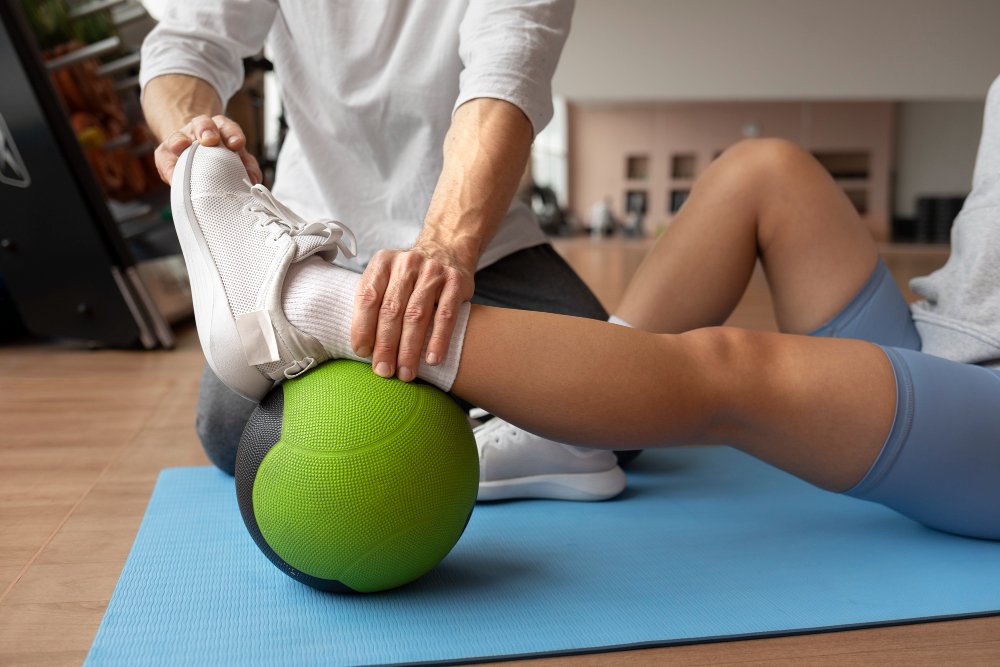
From professional athletes to weekend runners, gym lovers to those who just enjoy recreational activities, injuries are possible at any time. Injuries that affect the ankle, shoulder, knee or back can ruin your fitness regimen, as well as your day-to-day routine. Fortunately, if a sports injury occurs and is treated in time and rehabilitated properly, it will heal well and be unlikely to happen again.
Sports medicine in 2026 has come a long way; rehabilitative treatment is now geared as much as possible towards a return to strength and function, to correct movement patterns and improve overall athletic function and not solely pain relief. This is where sports physiotherapy can be of great help. Sports physiotherapists use a scientific approach to assessment and individual treatment plans to enable people to get back to the activities they enjoy, while ensuring the process is safe.
Our full range of rehabilitation programmes at our Sports Physiotherapy Clinic in Thane West is tailored to aid the recovery of an athlete or active person at a faster pace, prevent their next injury and optimise their performance.
What Is Sports Physiotherapy?
Sports physiotherapy is a particular speciality of physiotherapy that concentrates on the prevention, assessment, treatment, rehabilitation and performance improvement of sporting injuries.
Sports physiotherapy is different to physiotherapy in that it takes into account the physical characteristics of the various sporting activities and/or sports. The rehabilitation programs are tailored to the individual, as each athlete has a different movement pattern, training schedule and performance objectives.
A Sports physiotherapist in Thane will then collaborate closely with the patients to get the patients’ mobility, strength, flexibility, balance and coordination back on track and prepare them for a safe return to sports.
Why Sports Injuries Should Never Be Ignored
There is a popular belief amongst athletes that they are demonstrating commitment if they continue playing when they are in pain. Unfortunately, however, ignoring pain can lead to more serious injuries that can take longer to recover from.
Small muscle strains can turn into large tears, small ligament tears can become unstable, and if joint problems go untreated can cause problems in overall performance. Treatment delays will also lead to increased risk of compensatory movement patterns and, hence, additional stresses on other parts of the body.
Early diagnosis and rehabilitation can help an injury heal and prevent the development of future complications.
Common Sports Injuries Treated by Sports Physiotherapists
The repetitive stress on muscles, ligaments, tendons and joints of sports. This means that sports injuries are frequently seen and vary with the type of sport and training level.
Ankle sprains are one of the most common injuries in a variety of sports, especially football, basketball, badminton, running etc. Athletes who participate in pivoting or high-impact activities are susceptible to knee injuries like runner’s knee, meniscus injuries, and ACL tears.
Swimmers, tennis players and weightlifters are all common patients with shoulder issues such as rotator cuff injuries, instability and impingement. Runners are likely to suffer from shin splints, and athletes engaged in racquet sports and golf are prone to tennis elbow and golfer’s elbow injuries, respectively.
Sports rehabilitation is also a common procedure employed in the treatment of lower back pain, muscle strains, ligament sprains and hip injuries.
How a Sports Physiotherapist Helps
A Sports physiotherapist in Thane is a lot more than a pain reliever.
The first step to rehabilitation is a thorough evaluation that not only determines the nature of the injury, but also the causes of the injury. These can be muscle imbalances, poor posture, restricted movements, weak core stability or faulty patterns.
After determining the cause of the injury, an individualised rehabilitation strategy is developed to treat the injury and its underlying causes.
This has a comprehensive approach and will result in more complete recovery and a decreased risk of future injuries.
Comprehensive Movement Assessment
All good rehab programs begin with the knowledge of how the body moves.
Our physiotherapists will carefully look at posture, flexibility, joint mobility, strength of the muscles, balance, coordination and functional movements. Gait analysis can also be done for runners or athletes suffering from injuries in their lower limb.
These tests can help determine the areas where the movements are inefficient, potentially putting undue strain on joints and muscles.
Addressing these issues will help with recovery and enhance athletic performance.
Personalised Sports Rehabilitation
Every athlete is different and will recover in different ways.
Different sports, training levels, severity of the injury, fitness purpose and medical history impact the process of rehabilitation.
In our Sports Physiotherapy Clinic in Thane West, all the rehabilitation programs are customised to fit the patient’s requirements. Treatment is gradual with improvement in strength, mobility and confidence.
This personalised approach allows a safe recovery and lets patients return to sport before it’s time.
Manual Therapy for Faster Recovery
Sports physio treatment techniques that involve hands-on approaches are still important.
Manual therapy can be used to decrease muscle tightness, increase joint mobility, alleviate pain and restore normal movement. To enhance flexibility and decrease stiffness, soft tissue mobilisation, joint mobilisation, stretching and myofascial release are frequently employed.
These therapies are frequently provided along with active rehabilitation exercises to get the best recovery.
Strength and Conditioning
Rehabilitation is more than just healing injured tissues.
Athletes must get strong, have stamina, be stable and be powerful again before returning to competition. Progressive strengthening exercises not only help to re-strengthen muscles but will also provide support for joints and decrease the likelihood of re-injury.
Core strengthening, lower and upper limb conditioning and functional resistance training is all individualised to the athlete’s sport and rehabilitation phase.
Balance, Coordination, and Agility Training
Good sportsmanship involves having good body control, speedy reactions and accurate movements.
Balance and coordination may be affected following injury. Specific exercises are designed to re-train the nervous system and to enhance stability, reaction time and effectiveness of movement.
Agility drills involve athletes with movements that are relevant to their sport, including cutting, pivoting, jumping and sprinting.
This is an important period of rehabilitation before returning to full sport play.
Sports-Specific Rehabilitation
If the athlete is involved in a particular sport, recovery should be geared towards that sport’s needs.
Different strategies are needed for the different sports to rehabilitate a football player, tennis player, swimmer, marathon runner, and weight-lifter. Sport-specific training gradually exposes sports participants to the demands required in training and competition.
This specialised treatment will bridge the gap between clinical healing and ‘real-life’ sporting ability.
Injury Prevention Is Just as Important
One of the most important advantages of sport is the prevention of injuries.
Physiotherapists detect potential injuries or risk factors as early as possible, before they become an issue. Risk of injury can be heightened by muscle imbalances, lack of flexibility, asymmetry of movement and biomechanical dysfunction.
Corrective exercise programs can be used to correct these and enhance performance.
Preventive physiotherapy is an integral part of the training for athletes, and thus they can have a longer, healthier sporting career.
Working Alongside Sports Injury Doctors
Certain sports injuries will need a multidisciplinary approach.
Medical evaluation as well as physiotherapy may be required for severe ligament tears, fractures, recurrent instability of the joint and complex tendon injuries.
If specialist medical assessment, imaging, injections or surgical consultation is required, our rehab team work closely with experienced Sports Injury Doctors in Thane.
This integrated care approach helps patients through their recovery process.
Returning to Sport Safely
Re-injury is a common reason for returning to sports prematurely.
Just because an athlete is not in pain does not mean that he has recovered. Full participation will resume when the factors of strength, flexibility, endurance, coordination, balance and sport-specific performance are all restored to the appropriate levels.
Our return-to-sport programs feature functional testing and progressive activity planning, which allow the athlete to return to sport with confidence and while reducing the risk of reinjury.
The aim is to get back into sport as soon as possible, but to return safely and perform at their best.
Why Choose Our Sports Physiotherapy Clinic?
The selection of the rehabilitation team can have a great impact on the outcome of rehabilitation.
Our Sports Physiotherapy Clinic in Thane West offers one-to-one care using the most up-to-date evidence-based rehabilitation strategies. Our physiotherapists are qualified and skilled in assessing and treating injuries in professional athletes, recreational sports participants, fitness enthusiasts, students and active adults.
Whether through detailed movement assessment, manual therapy, strengthening exercises, mobility exercises, sports-specific rehabilitation and injury prevention to aid in long-lasting recovery, all aspects of care are focused on this.
In case required, we also have associated Sports Injury Doctors in Thane to provide complete management of complex injuries.
We do not just want to get rid of pain; we want to get him/her to move well, perform well and stay pain-free.
Any sport can lead to injury, no matter what one’s age or fitness level. But in most cases, if the athlete receives the care and hands-on assistance needed when it is available, he or she can recover and come back stronger than ever.
Sports physiotherapy is a combination of science-based assessment, tailored treatment, strengthening exercises, movement correction and injury prevention to assist in the long-term recovery and enhance sports performance.
Any time you experience ankle pain, ACL pain, shoulder pain, or muscle pain, and it keeps coming back, it’s important to seek professional care as soon as possible, especially if pain is recurring after experiencing a sports-related injury such as a sprain or tear.
Our highly trained physiotherapists at our Sports Physiotherapy Clinic in Thane West work tirelessly to get you back to a pain-free and confident state and to reach your sporting potential. Feel free to book an appointment with them to get the expert advice of a Sports physiotherapist in Thane or Sport Injury Doctors in Thane and take the first step towards a stronger, healthy and injury-free future.